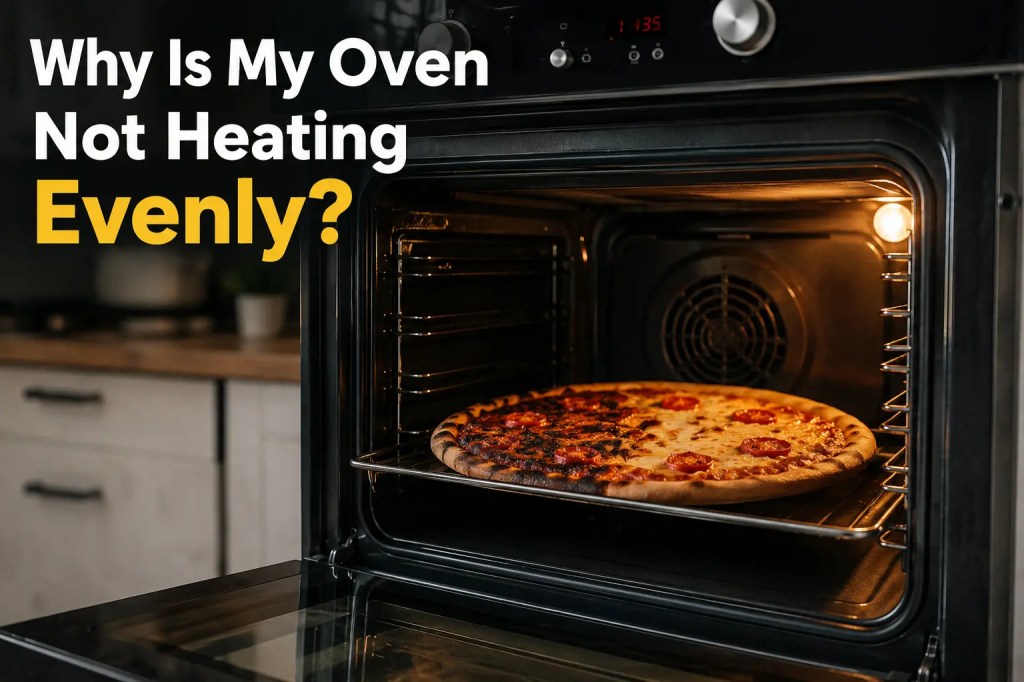
Uneven oven heating almost always comes down to one of four things: a failing heating element, a bad thermostat or temperature sensor, poor air circulation, or the wrong rack position for what you’re baking. None of these require replacing the oven. Here’s how to figure out which one you’re dealing with and what to do about it.
Start By Confirming It’s Actually Uneven
Before diagnosing anything, rule out the obvious. Cookies browning faster on one side of the tray, or a cake rising unevenly, can sometimes just mean the tray itself needs rotating halfway through baking, not that the oven has a real problem. Try baking something simple, a tray of identical cookies spaced evenly, without rotating it. If one side consistently browns faster than the other every single time, that’s a real heating issue worth digging into.
Check the Heating Elements
Electric ovens have two elements, one on top for broiling, one on the bottom for baking. A bottom element that’s partially failing will still glow and produce heat, just unevenly or at reduced output, which is easy to miss with a quick glance since it doesn’t necessarily go completely dark.
Look closely at the element while it’s on. Uneven glowing, dark spots, or visible blistering on the coil are all signs it needs replacing. This is a relatively affordable, straightforward repair on most models, and many people handle it themselves once the oven is unplugged and the old element is unscrewed and disconnected.
Gas ovens don’t have this exact issue since they use a single burner, but a dirty or partially clogged burner can produce an uneven flame that heats one side of the oven cavity more than the other.
Test the Temperature Sensor
Most ovens use a temperature sensor, a small probe usually mounted on the back or side wall of the oven cavity, to regulate heat. If this sensor drifts out of calibration or starts failing, the oven can run hotter or cooler than the display shows, and heat distribution suffers as the oven cycles the element on and off trying to compensate for inaccurate readings.
An oven thermometer, a cheap, standalone tool placed inside the oven, tells you what’s actually happening versus what the dial claims. Set the oven to 350 and check the thermometer after it preheats. A difference of more than twenty degrees points to a sensor or calibration problem.
Many ovens include a hidden calibration setting in the control panel that lets you adjust for a consistent offset. Check your manual for the exact steps, since this varies by brand and model.
Consider Air Circulation
Ovens without a convection fan rely entirely on heat rising naturally from the element, which means the top of the oven often runs hotter than the bottom, and the back can run hotter than the front depending on the door seal and vent placement. This isn’t a malfunction; it’s just how conventional ovens work, but it explains a lot of uneven baking complaints that people assume are mechanical problems.
If your oven has a convection setting, using it circulates air with a fan and typically produces much more even results, particularly for multi-rack baking. If you’re dealing with an older oven without this feature, rotating trays halfway through baking largely compensates for the natural unevenness.
Check the Door Seal
A worn or damaged door gasket lets heat escape steadily during baking, and the oven compensates by cycling the element more frequently, which can create hot spots near the element and cooler spots farther away as the heat struggles to distribute evenly before escaping.
Run your hand around the door seal while the oven is preheated, feeling for warm air leaking out. Visible cracking, flattening, or gaps in the rubber gasket are signs it needs replacing, a relatively inexpensive fix that often resolves uneven heating on its own.
Rack Position Matters More Than People Think
Even a perfectly functioning oven bakes unevenly if the rack position doesn’t match what’s being cooked. The center rack is the standard default for most baking since it sits in the most even part of the heat zone. Items placed too close to the top or bottom element get direct, concentrated heat that the rest of the oven cavity doesn’t share.
For multiple trays baked at once, rotating both position and orientation halfway through baking compensates for whatever unevenness the oven’s natural heat pattern creates.
When to Call a Professional
Replacing the heating element and door seal is generally a safe DIY repair on most models. Sensor calibration is usually adjustable via the control panel without any tools. If you’ve checked all of this and heating is still inconsistent, especially alongside error codes or a control board that seems to be malfunctioning, that points to a deeper electrical issue better handled by a technician.
Summary
Uneven oven heating typically traces back to a failing heating element, an inaccurate temperature sensor, natural air circulation limits, a worn door seal, or simply the wrong rack position for what’s being baked. Working through these one at a time usually identifies the cause quickly, and most of the fixes involved are inexpensive and manageable without professional help. Appliances Repair Blog covers the deeper troubleshooting for oven issues that go beyond these basics.
 Appliance Repair Blog
Leave a comment