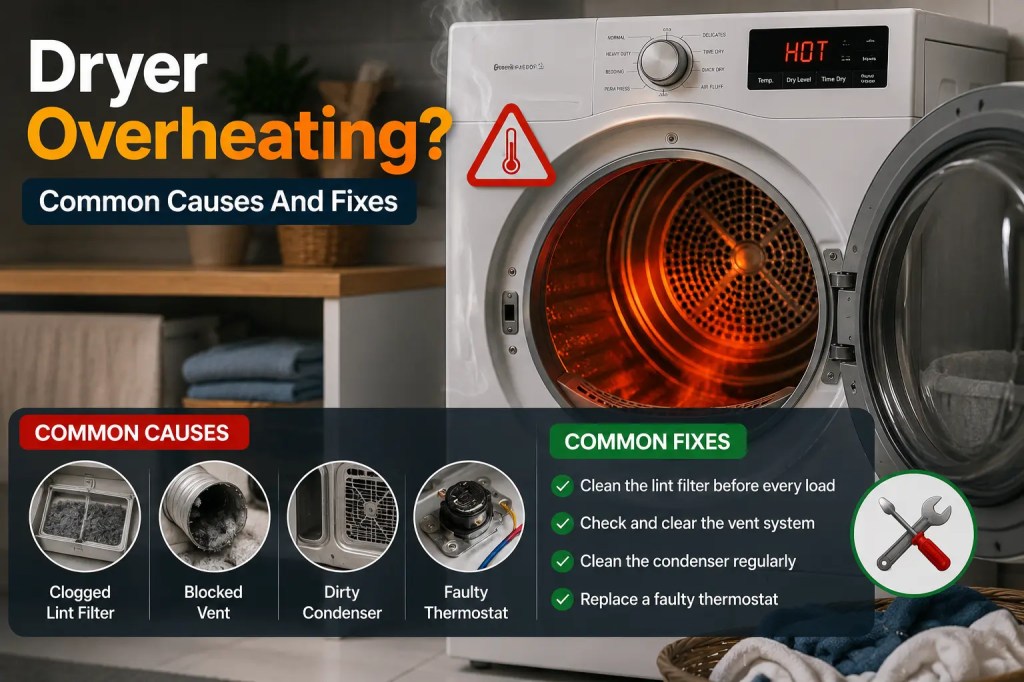
A dryer is supposed to produce heat, but it should never become so hot that you hesitate to touch the door or notice a burning smell in your laundry room. If your dryer feels hotter than usual or your clothes come out extremely hot after every cycle, it’s a warning sign that something isn’t working properly. Many overheating problems start small and can often be fixed before they turn into expensive repairs. Regular home appliance repair and routine maintenance are some of the best ways to keep your dryer running safely and efficiently.
Why Does a Dryer Overheat?
Dryers rely on a simple process to dry clothes. The heating element warms the air, the blower pushes that hot air through the drum, and the vent carries moisture outside. If any part of this system stops working correctly, heat begins to build up inside the dryer instead of escaping.
A Clogged Lint Filter
The lint filter is the first place you should check when a dryer starts overheating.
Every load of laundry leaves behind tiny fibers that collect on the lint screen. As the filter fills up, airflow becomes restricted. Instead of moving freely through the drum, hot air gets trapped inside the dryer, causing temperatures to rise.
Cleaning the lint filter after every load only takes a few seconds, but it makes a noticeable difference in both drying performance and safety.
Even if the screen looks clean, wash it occasionally with warm water and a little dish soap. Fabric softener residue can leave behind a thin film that blocks airflow.
A Blocked Dryer Vent
A clean lint filter doesn’t always mean airflow is good.
Over time, lint also collects inside the dryer vent that carries warm air outside your home. Dust, pet hair, and even bird nests can partially block the vent opening. When moist air can’t escape, heat stays inside the dryer, forcing it to run hotter than normal.
Some common signs of a blocked dryer vent include:
- Clothes taking longer to dry.
- The dryer cabinet becoming unusually hot.
- A warm or humid laundry room.
- A burning smell during operation.
- Weak airflow from the outside vent.
Cleaning the vent at least once a year can improve efficiency and greatly reduce the chances of overheating.
Overloading the Dryer
Trying to dry too many clothes at once may seem like a time-saver, but it often creates the opposite result.
A packed drum leaves very little space for warm air to circulate. The dryer keeps producing heat, but moisture remains trapped inside the clothing. As the appliance works harder to dry the load, internal temperatures continue to rise.
For the best performance, avoid filling the drum completely. Clothes should have enough room to tumble freely throughout the drying cycle.
A Faulty Thermostat
Your dryer uses a thermostat to regulate temperature while it’s running.
When the thermostat works properly, it turns the heating element on and off to maintain safe operating temperatures. If it begins to fail, the dryer may continue heating longer than necessary or reach temperatures that are much higher than normal.
Inconsistent drying performance combined with excessive heat is often a sign that the thermostat should be inspected or replaced.
A Damaged Heating Element
Many people assume a damaged heating element simply stops producing heat, but that’s not always true.
Sometimes the element becomes partially damaged and continues heating continuously instead of cycling on and off. This causes the dryer to become much hotter than intended.
If delicate clothing begins shrinking unexpectedly or feels unusually hot when the cycle ends, the heating element may be the source of the problem.
A Damaged Blower Wheel
The blower wheel is responsible for moving hot air through the drum and out of the vent. If it becomes loose, cracked, or clogged with lint, airflow drops significantly. Heat starts building up inside the dryer instead of leaving through the exhaust system.
A faulty blower wheel may also cause unusual rattling or humming noises while the dryer is running. If you notice both overheating and strange sounds, this component is worth checking.
Check the Vent Hose
Sometimes the problem isn’t inside the dryer at all.
A vent hose that is crushed behind the appliance or bent too sharply can restrict airflow just like a clogged vent. Pull the dryer away from the wall and make sure the hose has a smooth path without kinks or damage. This simple inspection can improve airflow and help prevent overheating.
Simple Ways to Prevent Dryer Overheating
A few minutes of maintenance can save you from expensive repairs later. Here are some simple habits that help keep your dryer running safely:
- Clean the lint filter after every load.
- Inspect the dryer vent regularly.
- Avoid overloading the drum.
- Leave enough space behind the dryer for proper ventilation.
- Schedule a professional vent cleaning every year if you use the dryer frequently.
These small maintenance tasks improve efficiency while reducing wear on the appliance.
When Should You Call a Professional?
If your dryer continues overheating after you’ve cleaned the lint filter and checked the vent, the problem may involve internal components such as the thermostat, heating element, or electrical wiring.
Stop using the dryer immediately if you notice smoke, a strong burning smell, or scorch marks on your clothing. These warning signs shouldn’t be ignored and should be inspected by a qualified appliance repair technician.
Final Thoughts
An overheating dryer is usually a sign that airflow has been restricted or that one of its heating components isn’t working properly. Problems like a clogged lint filter, blocked vent, overloaded drum, or faulty thermostat are among the most common causes. Fixing these issues early can improve drying performance, lower energy consumption, and help prevent costly repairs.
Regular maintenance and timely home appliance repair are the best ways to keep your dryer operating safely for years to come. If basic troubleshooting doesn’t solve the problem, having the appliance professionally inspected is the safest way to protect both your dryer and your home.


Leave a Reply